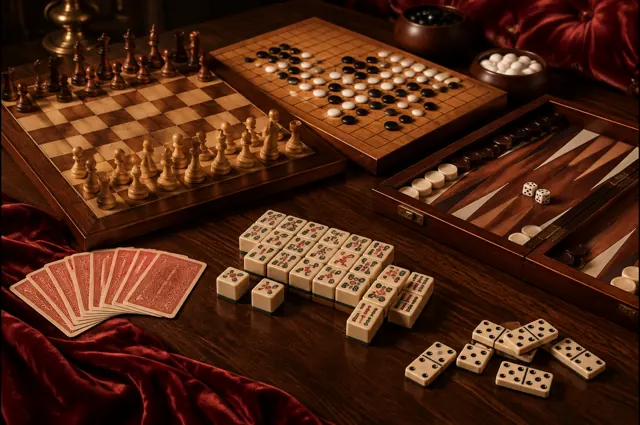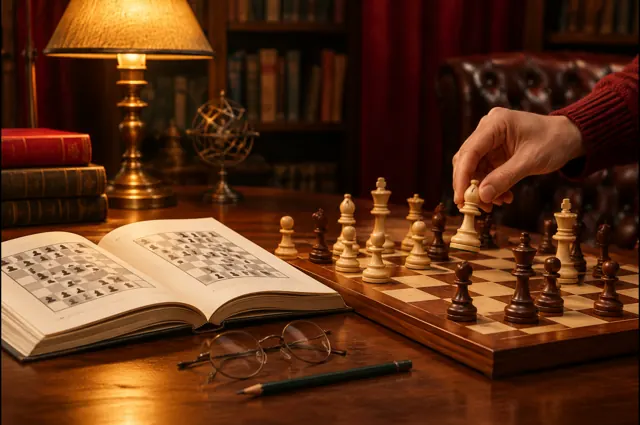
Whether you want to win more chess games, beat your family at cribbage or finally clear a difficult level, the path to mastering games looks remarkably similar. It is not about playing more - it is about practising with intent.
Step 1: Learn the rules and fundamentals completely
Many players stall because they never learned the rules properly. In backgammon, for example, beginners often do not know that you must use both dice when it is legally possible. In cribbage, missed points in the count add up over every game. Read a complete rules guide once, then reread it after your first ten games - you will notice details you missed.
Fundamentals are the small set of principles that apply in almost every game: control the centre in chess, avoid leaving blots in backgammon, keep flexible cards in rummy. Write them down and check your play against them.
Step 2: Practise one skill at a time
Psychologists call this deliberate practice: focused work on a specific weakness, with immediate feedback. Instead of playing ten random games, spend twenty minutes on one thing:
- Chess: tactical puzzles of one theme, such as forks or pins.
- Card games: counting cards played so you know what remains.
- Dexterity games: repeating the same shot until you can make it reliably.
- Video games: replaying one section until you clear it consistently.
Step 3: Review every loss
Your losses are free lessons. After each game, ask three questions: Where did the game turn? What did I believe at that moment? What would a stronger player have done? Chess players can use an engine for the third question; card and board game players can ask stronger friends or post positions in online communities.
Tip: keep a short notebook of recurring mistakes. When the same mistake appears three times, make it your next practice focus.
Step 4: Study how masters play
Every deep game has a record of expert play - annotated chess games, backgammon match transcripts, bridge columns, tournament videos. Studying master games shows you plans and patterns you would never discover alone. The key is active study: predict the master's move before you look.
Step 5: Play slightly stronger opponents
Playing much weaker opponents teaches bad habits that happen to work. Playing much stronger opponents is discouraging and hard to learn from. The sweet spot is opponents who win a little more than half the time. Online rating systems make this easy to find.
A sample weekly routine
| Day | Activity | Time |
|---|---|---|
| Monday | Skill drill (puzzles, shots, counting) | 30 min |
| Tuesday | Play 2-3 serious games | 45 min |
| Wednesday | Review Tuesday's games | 30 min |
| Thursday | Study one master game or expert video | 30 min |
| Weekend | Play against stronger opponents, note mistakes | 1-2 hours |
Choose a game worth mastering
This routine works best with a game deep enough to reward it. Browse our master games list to find one that suits you.