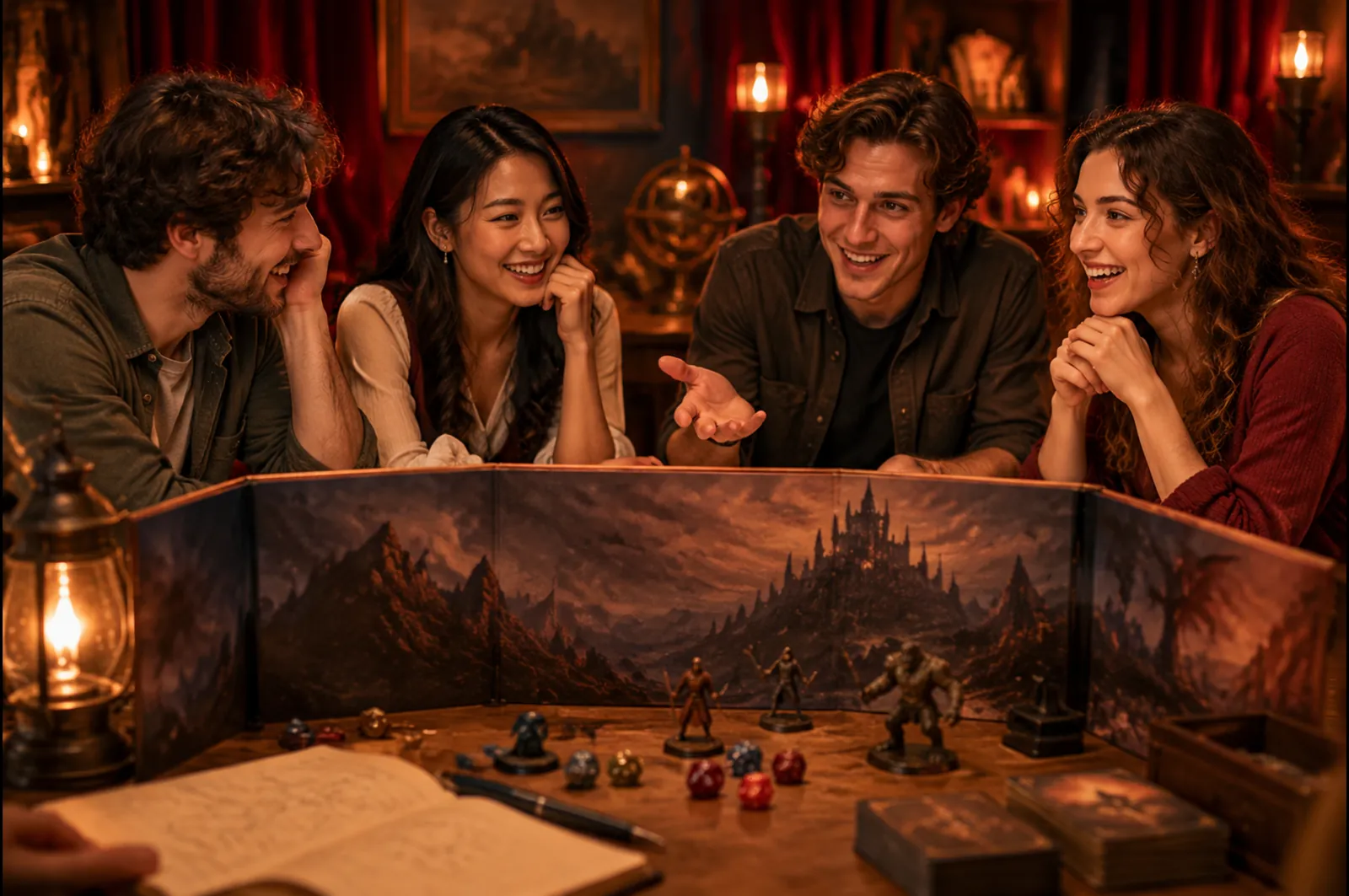
In tabletop roleplaying games like Dungeons & Dragons, Pathfinder or Call of Cthulhu, one player takes the role of game master (GM) - called the dungeon master (DM) in D&D. The GM describes the world, plays every non-player character and applies the rules. Players decide what their characters do; the GM decides what happens next.
What a game master actually does
- Describes the world and what the characters perceive.
- Plays all non-player characters (NPCs) and monsters.
- Adjudicates - decides when dice are needed and interprets results.
- Paces the session so it stays fun and moves forward.
- Looks after the table, making sure every player gets time in the spotlight.
Step 1: Run a session zero
Before the first adventure, gather the group to agree on the campaign's tone, the themes you will and will not include, and how characters know each other. Many groups use simple safety tools such as lines and veils (topics that are off-limits or happen "off-screen") or the X-card (a way to skip content without explanation). Ten minutes here prevents most table problems later.
Step 2: Prepare situations, not plots
New GMs often write a story and then struggle when players ignore it. Instead, prepare a situation: who wants what, what happens if the players do nothing, and where conflict will erupt. A useful prep checklist, popularised by Mike Shea's The Lazy Dungeon Master approach:
- Review the characters and what they care about.
- Write a strong opening scene.
- Outline a few possible scenes - not a fixed order.
- Write ten secrets or clues players might uncover.
- Develop interesting locations.
- Outline the important NPCs.
- Choose relevant monsters or opponents.
- Note any rewards or treasure.
The three clue rule: for every conclusion you need the players to reach, include at least three clues. Players will miss some - that is fine.
Step 3: Open every session strongly
Start with a brief recap, then drop the characters straight into something interesting - a conversation interrupted, a door kicked in, a storm on the horizon. Energy at the start of a session carries through to the end.
Step 4: Run scenes with clear goals
Every scene should have a question to answer: Will they convince the guard? Can they escape before the bridge collapses? When the question is answered, move on. If energy drops, cut to the next scene or introduce a complication.
Improvising with confidence
- Say "yes, and" or "yes, but" - accept player ideas and add a twist.
- Keep a list of names so improvised NPCs feel real.
- Ask the players. "What does your character know about this temple?" shares the creative load.
- Roll only when failure is interesting. If nothing exciting happens on a failure, just let them succeed.
Step 5: End on a hook and ask for feedback
Finish each session on a revelation or a cliffhanger so players leave excited for the next one. Then ask two quick questions: what did you enjoy most, and what would you like more of? Adjust your next session based on the answers - this is how good game masters become great ones.
Common mistakes new game masters make
- Over-preparing details players never see.
- Looking up every rule mid-game - make a quick ruling and check later.
- Letting one loud player dominate the spotlight.
- Punishing creative plans because they were not expected.
- Forgetting that the GM is a player too and should have fun.